
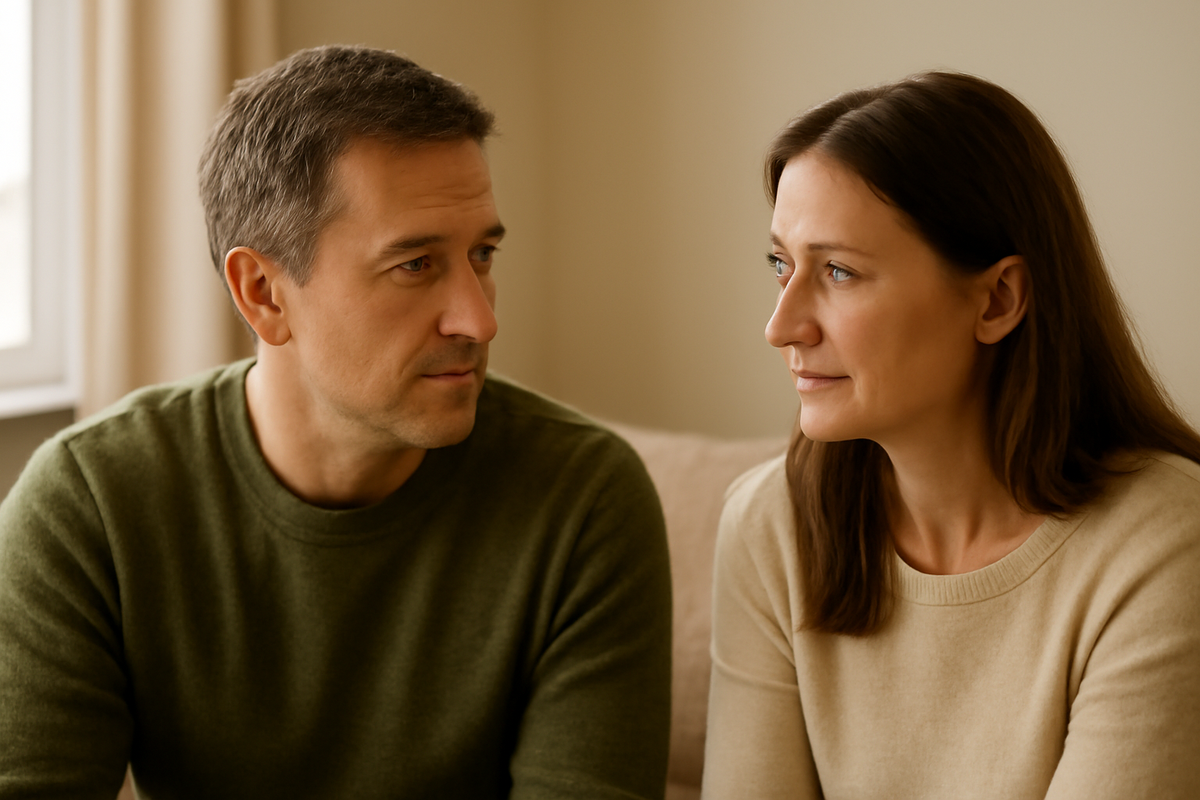
Don't tell your spouse that their body or their weight is unattractive. If a change in how you feel is affecting your intimacy, talk about your own experience instead, with care and curiosity, and leave their dignity intact.
Attraction does shift over a long marriage, and admitting that is not a crime. Being honest still doesn't give you licence to humiliate your spouse, pressure them, or make your affection depend on them losing weight.
Should you tell your spouse that their weight is affecting your attraction?
A conversation may be needed if you've started avoiding sex, pulling away emotionally or quietly building resentment. Your spouse can probably feel that distance already, and saying nothing tends to leave them guessing and fearing the worst.
Before you speak, ask yourself what you hope will happen. Compassionate honesty is about understanding each other. Handing over your discomfort, your preferences or your anxiety so that your spouse has to fix them is something else. If the outcome you're secretly hoping for is "they lose weight", wait. Attraction matters, but so do emotional safety and the years of history you share.
Could your loss of attraction be about something other than weight?
Often, yes. Resentment, stress, exhaustion, small children, ageing, health problems, sexual difficulties and a slow loss of closeness can all dull desire. The body is simply the easiest thing to blame. It's also worth asking whether social media, pornography or a fear of your own ageing have narrowed your idea of what an attractive partner looks like.
Weight can change for reasons your spouse hasn't chosen. The NHS overview of the causes of obesity lists an underactive thyroid, depression, menopause, disability and medicines including some steroids, antidepressants and beta blockers. Should you mention possible health reasons? Only if you're genuinely worried about their health, and never to diagnose them. Concern about health shouldn't be used to disguise a criticism of how they look.
When and where should you start the conversation?
The best time is private and calm, when neither of you is rushing, arguing, eating, undressed or about to have sex. Avoid raising it straight after a sexual rejection, while you're out shopping for clothes, or anywhere near children, relatives or friends.
Ask first, rather than announcing a verdict: "Could we talk about us, and how close we've been feeling lately?" Then be ready to listen without interrupting. One conversation is unlikely to settle this, and that's fine. You're opening a subject, not closing a case.
What can you say without shaming or insulting your spouse?
Use first-person language that describes your experience, not their body. For example: "I've felt some distance between us physically, and I want to understand what's happening for both of us."
If weight genuinely has to be named, tie it to your own experience rather than defining your spouse as undesirable: "I've noticed that changes between us are affecting how I experience attraction, and I'm frightened of hurting you." That sentence doesn't call them less attractive. It says something has shifted in you, and you're willing to look at it together.
You can talk about your sex life without demanding sex or weight loss. Ask what intimacy feels like for them at the moment, and whether they've noticed a change too. They may have been carrying their own worries, about their body, about you, or about the marriage.
Some things should never be said:
- insults, or jokes about their size
- comparisons with former partners or other people
- threats, open or veiled, of looking elsewhere
- calorie policing or unasked-for weigh-ins
- "You've let yourself go"
And if the real issue is appearance or attraction, don't say "I'm only worried about your health". Your spouse will usually hear what sits underneath it, and the dishonesty can hurt more than the truth.
What should you do if your spouse becomes upset, angry or withdrawn?
Stop trying to persuade or defend yourself. Acknowledge the hurt, and apologise for anything you said cruelly or clumsily, without taking back the truth that your intimacy needs attention.
Give them time and space, and let them know you're there when they're ready to talk. Don't ask for reassurance, quick forgiveness or a promise to lose weight. If the conversation leaves either of you in lasting distress, or sets off disordered eating, body image difficulties or a cycle of criticism and withdrawal, it's time for professional support.
How can you support your spouse and rebuild intimacy?
Whether to change their weight is your spouse's decision. If they choose to, support their goals without becoming their monitor or coach. With their agreement, you might cook together, walk together, protect your sleep, or encourage a visit to the GP.
Rebuild intimacy separately from any weight loss: affection, unhurried conversation, touch that doesn't have to lead anywhere, time together, and honest talk about what each of you enjoys and feels comfortable with. Affection, respect and sexual openness shouldn't be handed out as rewards for reaching a number on the scales.
In Buddhist psychology, present-moment awareness lets you notice disgust, fear, shame or defensiveness as they come up, without automatically acting on them. Karuna, or compassion, includes compassion for yourself, which makes it easier to offer to your spouse.
What else might you want to know?
Can a relationship survive when one partner is no longer physically attracted to the other?
Many do. Attraction tends to come and go over a long relationship, and it often comes back when resentment eases and couples feel close again. It does take both of you being willing to talk honestly.
Would couples counselling help, and how much does it cost in the UK?
Therapy can help you look at attraction, shame, resentment and communication, but nobody can guarantee that desire will return. Private fees in the UK vary. Mark Shiels works individually with relationship, intimacy and psychosexual concerns, and you can ask the practice directly about fees.
What if your spouse does not want to lose weight?
Their body is theirs to decide about. What's left for you is your own attraction, your expectations and how close the two of you are, and that's often where the real work is.
How can you take the next step?
If any of this sounds familiar, you can get in touch whenever you feel ready. Mark Shiels is a UKCP-registered Buddhist psychotherapist offering confidential support with relationship and intimacy concerns, in Covent Garden and North London or by video, FaceTime or telephone. Call 07973 890 164 or 0207 209 3224, or email mark@buddhistpsychotherapy.org.uk.